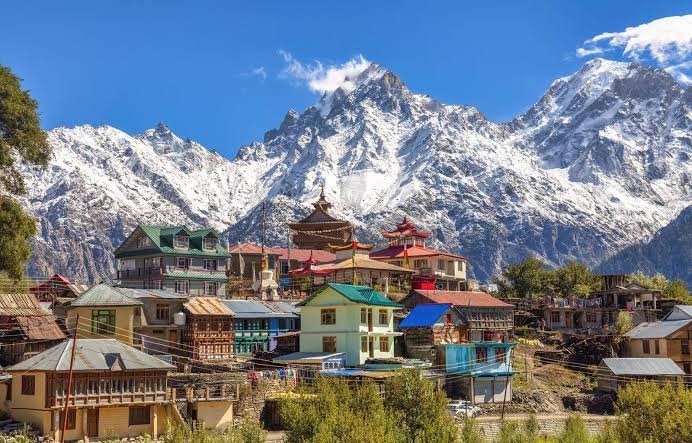
Himachal Pradesh doesn’t attract much foreign capital. Government data shows the state’s cumulative FDI equity inflow from October 2019 to June 2025 was $410 million, or about ₹3,284 crore. Maharashtra alone pulled in roughly $8 billion in a single quarter of FY25. Himachal’s entire five-and-a-half-year total barely registers next to that.
This piece looks at what foreign investment actually exists in the state, why it’s so limited, and what the government has done to try to grow it.
How Much Foreign Money Is Actually There
Year by year, Himachal Pradesh’s FDI equity inflow looks like this: $160.7 million from October 2019 to end of 2021, $19.7 million in 2022, $66.3 million in 2023, $81.6 million in 2024, and $81.7 million in the first half of 2025. The numbers are climbing, but from a small base, and the state still sits well outside India’s top 10 FDI destinations.
Most of the manufacturing people associate with Himachal Pradesh, including the well-known Baddi-Barotiwala-Nalagarh (BBN) pharma cluster, runs on domestic money. Cipla, Sun Pharma, Dr. Reddy’s, Lupin, and Torrent are all Indian companies. Abbott is the clearest case of an actual foreign multinational manufacturing there: its corporate site lists a working plant on Sai Road, Baddi, and the facility has had regulatory inspections on record as recently as 2022.
No official data breaks down which sectors the state’s foreign money has gone into. Government and industry material points to pharmaceuticals, manufacturing, and clean energy, but that claim hasn’t been confirmed against any official figure specific to the state. What’s better documented is the UAE’s role: it was the partner country at Himachal Pradesh’s 2019 investor summit, and the state ran pre-summit roadshows there, plus in Germany and the Netherlands, to pitch itself to overseas investors.
Why So Little Foreign Capital Comes In
The terrain works against it. The sectors that pull in the biggest FDI nationally, like financial services, telecoms, and large-scale electronics or auto manufacturing, need flat land and heavy infrastructure. Himachal Pradesh, being mostly hills, doesn’t have that at the scale a Gujarat or Tamil Nadu can offer.
Hydropower, the state’s real natural advantage, isn’t an FDI story either. Hydropower projects in India usually get built by domestic public or private players, or get financed with debt rather than foreign equity, which is what FDI numbers actually count.
And pharma grew on domestic tax breaks, not foreign capital. The 2003 Central excise exemption for the state, and the policies that followed it, were built to pull in Indian manufacturers, not specifically to attract multinationals. Abbott showed up alongside that boom, not because of it.
What the Government Has Done to Attract Foreign Investment
Himachal Pradesh improved its ease-of-doing-business rank, going from 16th to 7th in the Centre’s 2019 state business reform rankings, the last year a single number was published for each state. After 2020, the ranking system switched to broad categories, so there’s no current single rank to compare it to, but that 2019 jump is still the number state officials reach for when pitching investors.
It also ran a dedicated foreign-investor summit in 2019. The Rising Himachal: Global Investors’ Meet, held in Dharamshala that November and opened by the Prime Minister, named the UAE as partner country and included a session with the UAE’s ambassador to India on growing trade ties. The event, taking domestic and foreign investors together, aimed for ₹85,000 crore in MoUs and ended up signing 703 worth an estimated ₹96,721 crore. The state never published how much of that came from foreign money versus Indian money.
A new industrial policy is in progress, but hasn’t landed yet. As of June 2026, it still hadn’t been notified, though Chief Minister Sukhvinder Singh Sukhu had given the Industries Department a two-month deadline, citing the need to keep pace with neighbouring states. The ideas floated alongside it, electric taxis, green hydrogen buses, a new city near Chandigarh, are about general industrial competitiveness, not foreign investment specifically, though a better investment climate overall would help both.
One concrete project is moving forward: the Una Bulk Drug Park. This Centre-backed project, meant to cut India’s reliance on imported pharmaceutical ingredients, got environmental clearance in September 2025 and had its foundation laid in April 2026. It’s domestic policy at its core, but it could end up making the state more attractive to foreign pharma companies looking to localise supply chains, since that’s one of the goals of the national scheme behind it.
What This Means Going Forward
Himachal Pradesh’s foreign investment numbers are small, and nothing currently in the pipeline, not the pending policy, not the Una park, not the EV and hydrogen plans, is built specifically to change that. These are domestic competitiveness moves first. Any boost to foreign investment would be incidental.
If the state actually wants its FDI numbers to move, it probably needs another dedicated push like the 2019 summit, this time with a public accounting of what came from abroad versus what came from India, so anyone can actually track whether it worked. Until then, companies like Abbott remain the exception in a state whose industrial base is built and paid for almost entirely with Indian money.