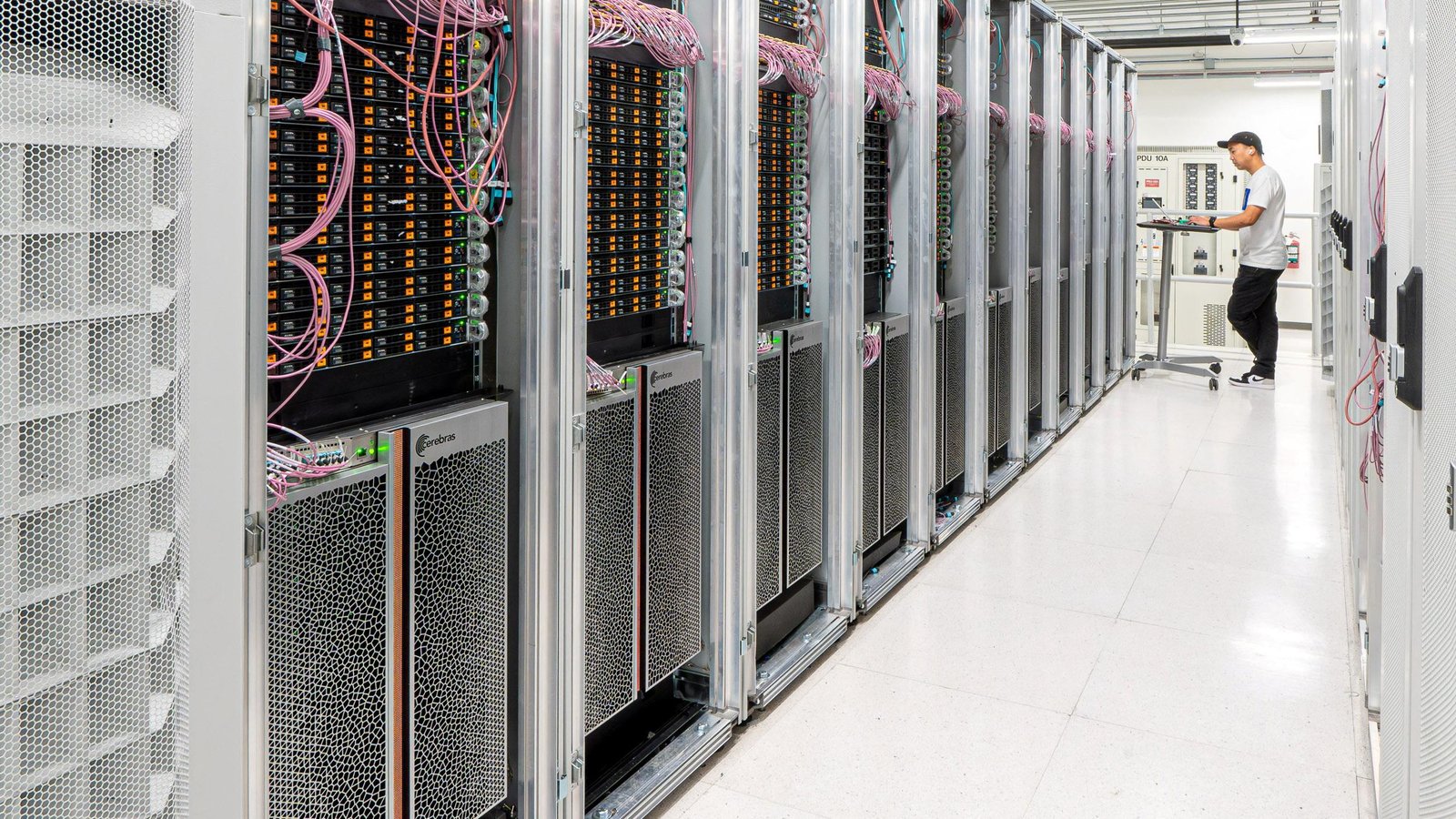
G42, Cerebras, MBZUAI, and C-DAC are building a national AI supercomputer on Indian soil, governed entirely by Indian frameworks, and open to everyone from premier research institutions to startups.
India is getting its first exaflop-scale AI supercomputer, and the consortium building it spans two countries, four institutions, and a diplomatic relationship that has been quietly gathering weight for years.
The announcement came at the AI Impact Summit 2026 in New Delhi. G42 and Cerebras are delivering the system in partnership with Mohamed Bin Zayed University of Artificial Intelligence and India’s Centre for Development of Advanced Computing. At 8 exaflops of AI compute, measured using AI-optimised lower-precision operations, this is not an incremental upgrade. It is a transition to an entirely different class of computing, one that makes training and inference for the largest AI models possible within Indian borders for the first time.
The project follows the 5th India-UAE Strategic Dialogue in December 2025 and UAE President Sheikh Mohamed bin Zayed Al Nahyan’s visit to India in January 2026, which locked in a broad bilateral framework covering defence, technology, space, and energy. The supercomputer is the most tangible technology output of that relationship so far.
Built for sovereignty, not retrofitted for it
The system will be hosted entirely within India and governed by Indian frameworks. All data stays within national jurisdiction. That is not a regulatory concession added late in the process. It is the design premise.
For government agencies and research institutions working with sensitive data, this matters immediately. Exaflop-scale AI compute that meets Indian sovereignty requirements has not existed until now. Mission-critical workloads that previously had no viable domestic option now have one.
Manu Jain, CEO of G42 India, put it plainly: “Sovereign AI infrastructure is becoming essential for national competitiveness. This project brings that capability to India at a national scale, enabling local researchers, innovators, and enterprises to become AI-native while maintaining full data sovereignty and security.”
Open access as a structural commitment
The access model is one of the most consequential decisions embedded in the announcement. The system is not reserved for a small group of anchor institutions. It is being designed to serve premier research institutions, startups, small and medium enterprises, and government ministries alike. The stated goal is to reduce barriers to AI innovation for applications serving India’s 1.4 billion citizens, particularly in healthcare, agriculture, and education.
Richard Morton, Executive Director of the Institute of Foundation Models at MBZUAI, said: “MBZUAI is committed to advancing AI research and education that addresses real-world challenges. This collaboration with India represents a shared commitment to expanding access to advanced AI compute for researchers and students, enabling breakthroughs in critical areas like healthcare, agriculture and education.”
Cerebras brings a proven track record
The India deployment is not Cerebras and G42’s first project at this scale. The two have already delivered Condor Galaxy supercomputers in the United States, which means the technology arriving in India has been tested under demanding conditions.
Andy Hock, Chief Strategy Officer at Cerebras, said: “Cerebras and G42 have already successfully delivered Condor Galaxy supercomputers in the United States, demonstrating how our technology is purpose-built for the most demanding AI workloads at scale. Deploying this system in India marks a significant step forward in the country’s computational capacity and sovereign AI initiatives. It will accelerate training and inference for large-scale models, enabling researchers and developers to build AI tailored to India’s needs.”
What came before, and what it points toward
The supercomputer does not arrive without context. In December 2025, G42 and MBZUAI released NANDA 87B, an open-source Hindi-English large language model with 87 billion parameters. The model and the infrastructure are moving in the same direction. Compute capacity and India-specific model development are building on each other, which is a more meaningful signal than either would be alone.
India in early 2026 is attracting sovereign AI investment from multiple directions. The G42-Cerebras-MBZUAI-C-DAC consortium is the first to announce exaflop-scale infrastructure under Indian governance with open access written into its design. Whether that access model holds as real demand arrives is the question worth watching. The hardware, at least, is no longer the constraint.